Air Pollution
What is air pollution?
Air pollution is a mix of hazardous substances from both man-made and natural sources. Vehicle emissions, fuel oils and natural gas to heat homes, by-products of manufacturing and power generation, particularly coal-fueled power plants, and fumes from chemical production are the primary sources of human-made air pollution.
Frequently Asked Questions
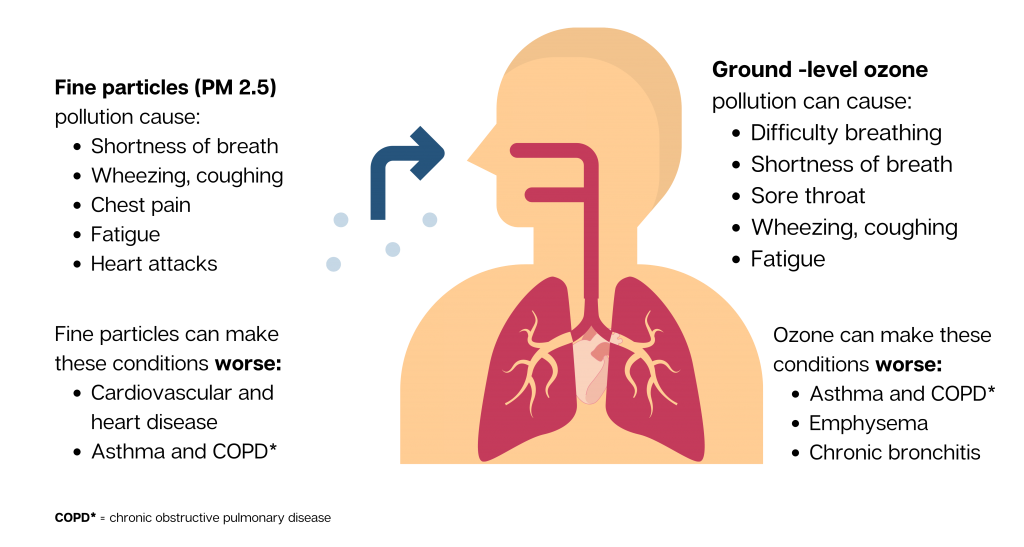
Exposure to air pollution can affect everyone’s health. When we breathe, pollution enters our lungs and can enter our bloodstream. Air pollution can contribute to small annoyances such as coughing or itchy eyes. Exposure to both particulate matter and ozone can also cause or worsen many diseases involving the lungs and heart, leading to hospitalizations, cancer, or even premature death.
| Daily AQI Color | Levels of Concern | Values of Index | Description of Air Quality |
|---|---|---|---|
| Green | Good | 0 to 50 | Air quality is satisfactory, and air pollution poses little or no risk. |
| Yellow | Moderate | 51 to 100 | Air quality is acceptable. However, there may be a risk for some people, particularly those who are unusually sensitive to air pollution. |
| Orange | Unhealthy for Sensitive Groups | 101 to 150 | Members of sensitive groups may experience health effects. The general public is less likely to be affected. |
| Red | Unhealthy | 151 to 200 | Some members of the general public may experience health effects; members of sensitive groups may experience more serious health effects. |
| Purple | Very Unhealthy | 201 to 300 | Health alert: The risk of health effects is increased for everyone. |
| Maroon | Hazardous | 301 and higher | Health warning of emergency conditions: everyone is more likely to be affected. |
| Air Quality Index | Who Needs to be Concerned? | What Should I Do? |
|---|---|---|
| Good (0-50) |
It's a great day to be active outside. | |
| Moderate (51-100) |
Some people who may be unusually sensitive to particle pollution. | Unusually sensitive people: Consider reducing prolonged or heavy exertion. Watch for symptoms such as coughing or shortness of breath. These are signs to take it easier. Everyone else: It’s a good day to be active outside. |
| Unhealthy for Sensitive Groups (101-150) |
Sensitive groups include people with heart or lung disease, older adults, children and teenagers. | Sensitive groups: Reduce prolonged or heavy exertion. It’s OK to be active outside, but take more breaks and do less intense activities. Watch for symptoms such as coughing or shortness of breath. People with asthma should follow their asthma action plans and keep quick relief medicine handy. If you have heart disease: Symptoms such as palpitations, shortness of breath, or unusual fatigue may indicate a serious problem. If you have any of these, contact your heath care provider. |
| Unhealthy (151-200) |
Everyone | Sensitive groups: Avoid all physical activity outdoors. Move activities indoors or reschedule to a time when air quality is better. Everyone else: Avoid prolonged or heavy exertion. Consider moving activities indoors or rescheduling to a time when air quality is better. |
| Very Unhealthy (201-300) |
Everyone | Sensitive groups: Avoid all physical activity outdoors. Move activities indoors or reschedule to a time when air quality is better. Everyone else: Avoid prolonged or heavy exertion. Consider moving activities indoors or rescheduling to a time when air quality is better. |
| Hazardous (301-500) |
Everyone | Everyone: Avoid all physical activity outdoors. Sensitive groups: Remain indoors and keep activity levels low. Follow tips for keeping particle levels low indoors. |
| Air Quality Index | Who Needs to be Concerned? | What Should I Do? |
|---|---|---|
| Good (0-50) |
It's a great day to be active outside. | |
| Moderate (51-100) |
Some people who may be unusually sensitive to ozone. | Unusually sensitive people: Consider reducing prolonged or heavy outdoor exertion. Watch for symptoms such as coughing or shortness of breath. These are signs to take it easier. Everyone else: It’s a good day to be active outside. |
| Unhealthy for Sensitive Groups (101-150) |
Sensitive groups include people with lung disease such as asthma, older adults, children and teenagers, and people who are active outdoors. | Sensitive groups: Reduce prolonged or heavy outdoor exertion. Take more breaks, do less intense activities. Watch for symptoms such as coughing or shortness of breath. Schedule outdoor activities in the morning when ozone is lower. People with asthma should follow their asthma action plans and keep quick relief medicine handy. |
| Unhealthy (151-200) |
Everyone | Sensitive groups: Avoid prolonged or heavy outdoor exertion. Schedule outdoor activities in the morning when ozone is lower. Consider moving activities indoors. People with asthma, keep quick-relief medicine handy. Everyone else: Reduce prolonged or heavy outdoor exertion. Take more breaks, do less intense activities. Schedule outdoor activities in the morning when ozone is lower. |
| Very Unhealthy (201-300) |
Everyone | Sensitive groups: Avoid all physical activity outdoors. Move activities indoors or reschedule to a time when air quality is better. People with asthma, keep quick-relief medicine handy. Everyone else: Avoid prolonged or heavy outdoor exertion. Schedule outdoor activities in the morning when ozone is lower. Consider moving activities indoors. |
| Hazardous (301-500) |
Everyone | Everyone: Avoid all physical activity outdoors. |
Note: If you don't have an air conditioner, staying inside with the windows closed may be dangerous in extremely hot weather. In these cases, seek alternative shelter.
Wildfire Smoke
Frequently Asked Questions
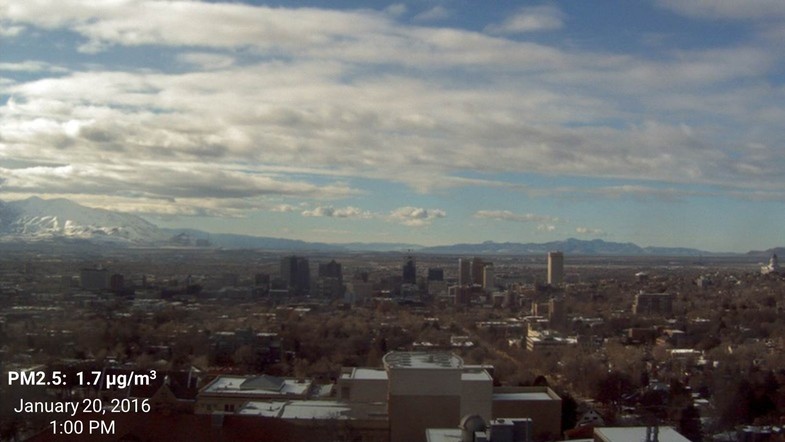
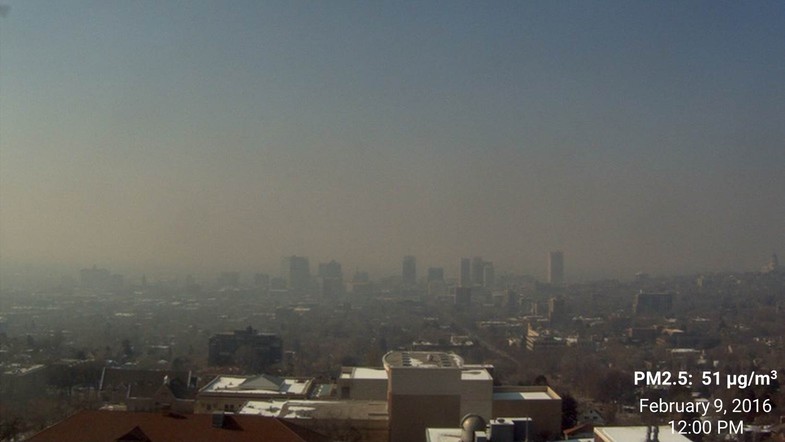
Wildfire smoke is made up of a mixture of gases and fine particles produced when wood and other organic materials burn. The biggest health threat from smoke is from fine particles. These microscopic particles can be inhaled deep into your lungs. Smoke can also irritate your eyes and your respiratory system, and worsen chronic heart and lung diseases. The amount and length of smoke exposure, as well as a person’s age and degree of susceptibility, play a role in determining whether someone will experience smoke-related health problems.
Click the following link to access and download our wildfire smoke FAQ sheet for a quick overview about wildfire smoke.
Smoke may worsen symptoms for people who have pre-existing health conditions and those who are particularly sensitive to air pollution. Sensitive groups include:
- People with asthma or other chronic respiratory disease
- People with respiratory infections
- People with cardiovascular disease
- People ≥ 65 years of age
- People with diabetes
- Infants and children
- Pregnant woman
- Smokers, especially those who have smoked for several years
High concentrations of smoke can cause a range of health problems, including:
- Burning eyes, a runny nose, cough, phlegm, wheezing, chest pain, and difficulty breathing.
- If you have heart or lung disease, smoke may make your symptoms worse.
- People with heart disease might experience chest pain, palpitations, shortness of breath, or fatigue.
- People with lung disease may not be able to breathe as deeply or as vigorously as usual, and may experience symptoms such as coughing, phlegm, chest discomfort, wheezing and shortness of breath.
Limit your exposure to the smoke:
- Download this checklist to help prepare you and your family from wildfire smoke. What can I do to protect my family against wildfire smoke?
- En español: ¿Qué puedo hacer ahora para proteger a mi familia del humo de los incendios forestales?
- Stay indoors whenever possible and keep indoor air clean by closing doors and windows.
- Avoid physical activities outdoors if smoke is in the air.
- Avoid activities that create more indoor pollution, such as frying foods, sweeping, vacuuming, burning candles, smoking and using gas-powered appliances.
- Use a portable air cleaner with a high-efficiency (HEPA) air-cleaning filters.
- Choose quality air cleaning technologies that do not create ozone.
- How to Choose a Portable Air Cleaner - CEHN
- Use a do-it-yourself HEPA-filter box fan (Español).
- Drink plenty of water to help reduce symptoms of scratchy throat and coughing.
- Monitor the air quality conditions in your area at air.utah.gov
- Consider leaving the area if air quality is poor and it’s not possible to keep indoor air clean, especially for those who have health conditions.
- Check the local air quality index (AQI) on the Utah DEQ’s website or the AirNow website.
- Visit Utah Wildfires Information website.
Indoor Air Quality
Indoor Air Quality (IAQ) refers to the air quality within and around buildings and structures, especially as it relates to the health and comfort of building occupants. The average person spends up to 90 percent of their time inside. Poor indoor air quality can cause similar health effects as exposure to outdoor pollution such as: decreased lung size and function, acute respiratory illnesses (such as asthma and bronchitis), emphysema, and even some types of cancer.
Frequently Asked Questions
A person’s risk of experiencing health effects from air pollution varies depending on their age, where they live, underlying health conditions, and other factors. People most at risk of health problems related to indoor air pollution include:
- People with lung diseases, such as asthma, chronic bronchitis, emphysema, and chronic obstructive pulmonary disease(COPD)
- Infants and young children
- Adults older than 65
- People with a cardiovascular disease
- People who smoke or are exposed to second-hand smoke
- On poor air days, keep doors and windows shut to keep pollutants out.
- Open windows and doors to increase airflow, when outdoor air quality is good.
- Do not use scented or unscented candles, artificial air fresheners, or products with fragrances.
- Optimize heat, ventilation, and air conditioning (HVAC) systems.
- Use a portable air cleaner with a high-efficiency (HEPA) air-cleaning filters.
- Choose quality air cleaning technologies that do not create ozone.
- How to Choose a Portable Air Cleaner - CEHN
- A home-made HEPA-box fan filter (Español) is an excellent ventilation alternative.
- Avoid activities that create more indoor pollution, such as frying foods, sweeping, vacuuming, burning candles, smoking and using gas-powered appliances.
Air quality projects
A group of researchers from the University of Utah were one of the 19 winners of the 2023 NSF CIVIC Innovation Challenge. The award will be used to help protect children from air quality hazards, particularly during outdoor activities, by placing an outdoor air quality sensor at every high school in Utah. The sensors will help develop automated location-specific air quality forecasts, and provide air quality alerts to individuals so they can make decision about outdoor activities. This project will also provide indoor air quality sensors to childcare facilities across Utah. Utah APPLETREE provides health education for the project, and creates health education materials regarding the project.
The outdoor sensor nodes will measure particulate matter that can be present at high concentrations during winter inversion, high wind events, and wildfires. The indoor sensor nodes will measure particulate matter and carbon dioxide, and these will help us understand the impacts of poor outdoor air quality on indoor air quality. Researchers from the University of Utah are working with key civic partners, including Utah’s Department of Health and Human Services, Utah’s Asthma Program, the Utah Athletic Trainers Association, Utah High School Activities Association, the Utah Board of Education, the Utah Parent Teachers Association, and the Utah Department of Environmental Quality to use this new information to protect children’s health.
View the real-time measurements and 3-day air-quality forecasts at our aqandu website.
Visit the CREATE AQI website to see news and events, ongoing research, and who is involved with the CREATE AQI project.
From the project website:
Poor indoor air quality (IAQ) in schools is a growing concern, with pollutant levels often 2-5 times higher than outdoor levels. Because school staff and children spend a considerable amount of their time at schools, exposure to indoor air pollutants is of particular concern. Poor IAQ can affect the health, comfort, concentration and performance of school staff and students. IAQ is influenced by factors such as inadequate ventilation, synthetic materials, and external sources like wildfires and dust storms. Common pollutants include radon, carbon monoxide, carbon dioxide, particulate matter, and volatile organic compounds. Clean Air Schools for U aims to improve IAQ and reduce greenhouse gas emissions in schools. It will be achieved through energy efficiency and IAQ assessments, indoor/outdoor monitoring of pollutants, and the evaluation of IAQ improvement and GHG reduction strategies. Additionally, community engagement, education, and training activities are included.
This project aims to improve IAQ and energy efficiency in schools through a comprehensive set of activities. These include:
- Sensor deployment
- Energy assessments of the school
- Sensitivity analyses
- Community engagement
- Distribution of free air filters and cleaners
- Impact assessment
You can visit the project website at this link: Clean Air Schools for U
Utah APPLETREE has partnered with the University of Utah and the Department of Environmental Quality's Division of Air Quality to learn more about particulate matter (PM) in underserved neighborhoods on the west side of the Salt Lake Valley. The team will be using affordable air quality sensors in those areas to measure levels of PM2.5 and PM10 particles.
We are developing air quality maps and alerts to provide instant, local air quality information. Interested community members can get involved and will be compensated for their time. Community input will also help inform air quality sensors’ placement. Outreach modules on particulate pollution and its impact on local air quality will also be available for use by educators and other interested community members.
If you would like to be involved in this project, please visit: Westside Air: Get Involved
This project will be completed in May 2026 and updates will be shared here and in the WestSide AirSense newsletter.
To sign up for the newsletter please visit: WestSide Airsense